Lawful seizure
BCCA goes Vavilov on commercial arbitration. Plus inadvertent privilege waivers, fake quotes, and all the latest Canadian legal news.

Dylan Gibbs
March 18, 2026
 |
PRESENTED BY |  |
Tommy Thompson found a shipwreck full of gold. Then he spent 10 years serving a contempt sentence because he wouldn't say where he put it.
But as of this month, Thompson has finally said "Ahoy" to his freedom. A judge decided that 10 years was long enough to prove Thompson wouldn't be purging his contempt.
And wouldn't you know it... a gold bar just like the ones Thompson found on the ship just went up for auction.
— Dylan Gibbs
TODAY'S DOCKET |
Seizing a Boeing
Tracking cellphones
Arbitration standards
Pleading away privilege
Fake quotes; real citations
Saskatchewan's gun shield

STAYING CURRENT
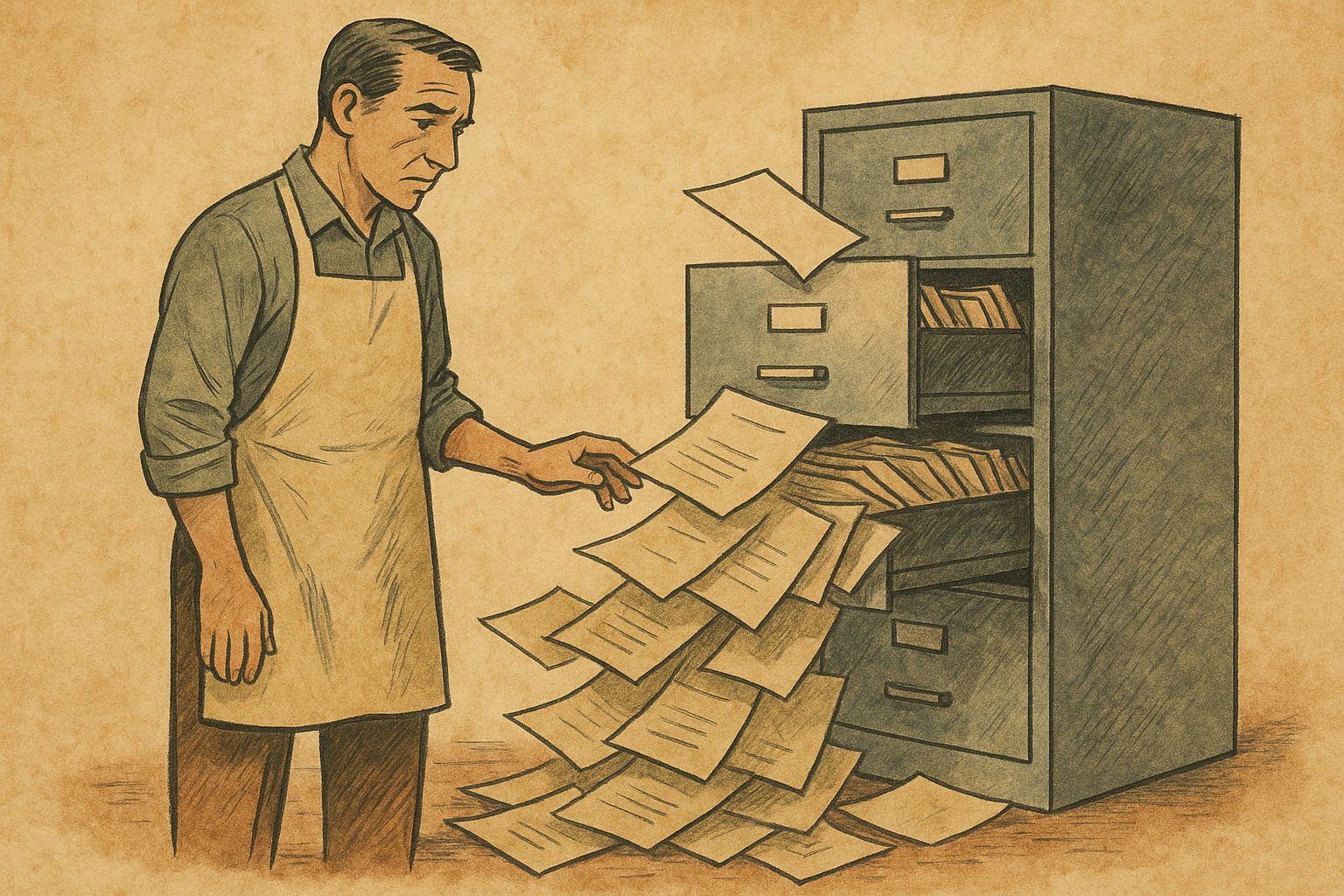
Inject your legal understanding, lose your privilege
One York Street v. 2360083 Ontario, 2026 ONCA 176
If you rely on your understanding of a contract's legal effect as part of your defence, you've waived privilege over the advice you received when you signed it. The Ontario Court of Appeal reached that conclusion in a commercial lease dispute after the tenant tried to sidestep the issue — first by falsely claiming no legal advice had been obtained, then by amending the pleading to remove the admission. Neither move worked:
[A] party who injects their understanding of their legal position into a case by relying on it in their claim or defence cannot then shelter legal advice which might be used to challenge their assertions about their understanding of their legal position.
The “wasn’t AI” defence
Kapahi Real Estate v. Elite Real Estate Club, 2026 ONSC 1438
A lawyer filed a 62-page reply factum citing real cases with correct CanLII citations — then attached quotations that don’t appear in any of them. When the Court asked whether he’d used AI, counsel said no. Justice Myers referred the matter to the LSO:
The most obvious explanation for these fake quotations is that counsel used AI to draft the factum. But I am not making that finding, as I have not had the benefit of full submissions on this issue.
As is often the case, if Mr. Parvaiz has not been truthful, the cover-up may be worse than the initial error.
[T]he best outcome to determine if there has been either use of AI hallucinations or deliberate falsification of law is for those with the authority to investigate to be left to do so. It will be up to the authorities to decide if charges of one type or another should be brought.
Consumer protection arbitration ban doesn't cover past disputes
Vandenbosch v. Rogers, 2026 BCCA 102
BC no longer lets companies force consumers into arbitration agreements. But what happens to disputes that arose before the ban took effect? According to the Court of Appeal, the ban applies to existing contracts — but it doesn't apply to existing disputes.
[T]he Legislature knows how to create retroactive legislation; it knows how to create legislation that applies as of a date prior to its coming into force; and it knows how to create legislation that applies to facts that have already occurred.
SPOTLIGHT 🔦
Arbitration's day in court

Vancouver School District No. 39 v. Kingsgate Property, 2026 BCCA 98
How tough is it to review an error of law in an arbitration decision? It depends who you ask — but BC has now gone the easy route. The BC Court of Appeal’s decision marks the third appellate decision to address this issue since 2021 — and they’re split 2:1.
A bit of context: Vancouver's school board and a mall developer have been disputing commercial rent on the same lease for decades. A 1999 arbitration panel interpreted a key lease provision to set the rent. A 2022 panel reinterpreted the same provision and arrived at a much higher figure — $9.6 million per year versus $1.65 million.
So how closely should we inspect the new panel’s decision to give the developer a do-over?
It used to be hard to review arbitration awards for legal errors. The theory: just as courts deferred to the expertise of administrative tribunals, they should also defer to the expertise of expert arbitrators chosen by contracting parties.
But ever since the SCC introduced a new judicial review framework in Vavilov, courts have been wondering whether new rules also apply to commercial arbitration appeals.
At the BCCA: All three justices agreed on the threshold question: Housen's appellate standards — correctness for questions of law — apply to statutory appeals from commercial arbitration awards. That is a direct departure from Sattva, which held that arbitral awards are presumptively reviewed for reasonableness.
The court's reasoning follows the logic of Vavilov: a statutory right of appeal signals legislative intent to apply appellate standards. The BCCA found no principled reason to treat the word "appeal" differently just because the decision came from an arbitrator rather than an administrative tribunal:
It is difficult to discern ... a good reason for adopting differing standards of review [for arbitration and administrative decision making].
The fact that arbitrators are selected for expertise is not justification for greater deference to their adjudication of legal questions.
Where parties have not [contracted out of the statutory appeal mechanism], their decision should be respected with the understanding that parties know the meaning of the term “appeal”, including that the Housen standards of review apply.
Since parties can opt out of appellate review entirely under BC’s commercial arbitration legislation, a deferential standard of review isn't needed to protect the goals of speed and finality.
On issue estoppel: With the standard of review relaxed, the Court was free to dive in. And dive the majority did.
The majority held that the second arbitration panel effectively interpreted the lease from scratch, used that interpretation to declare the first panel's interpretation "unworkable", and — based on that unworkability — ignored the original ruling. The majority's assessment was blunt:
[The second arbitration panel] re‑defined the meaning of "immediate" in [the lease]. They did not find the [first panel's] alternative decision to be patently perverse. They simply came to a different conclusion. Respectfully, such reasoning is circular, and defeats the purpose of issue estoppel.
Big picture: We now have three appellate decisions directly covering the standard of review for arbitration appeals. Manitoba went the Sattva route, sticking with a deferential posture in Buffalo Point. Northwest Territories went the other way in Northland Utilities. And BC has now joined the correctness camp.
The SCC left this question open in Wastech, but with intermediate appeal courts divided, we can expect this issue to land back on the top court's plate soon.
FROM OUR COMMUNITY
What’s new at Inn Laws

Here’s what’s happening in our private community for lawyers building modern and intentional practices.
One of our most recent trending threads is a discussion about AI time tracking tools. Time tracking is one of the things I miss least about private practice, so it’s been super neat hearing about the tools people are using to make it easier.
Next week, we're sitting down with Jeffery Lamont — wealth advisor who’s spent nearly three decades working with lawyers on their money. We’re doing a candid Ask Jeff Anything format so that none of our members turn into a 65-year-old partner who is stressed because they stuck their head in the sand about money their whole career.
Want to get in on the action? Apply to join.
BY THE NUMBERS 📊

118 (and growing): The tally of court and tribunal decisions affected by AI-generated hallucinations since January 2024. Courtready spun up a monitoring dashboard with all sorts of stats on the extent and source of the problem.
€890: The size of the debt that prompted Austrian bailiffs to seize an entire Boeing 737 mid-turnaround at Linz Airport. Ryanair ignored a court order requiring it to pay a passenger for a delayed flight, so bailiffs boarded the plane and marked it seized. The airline can probably expect a few more compensation claims from the passengers on board.
3: The federal Immigration Minister’s loss count against the Kumars — an Indian couple who faced repeated visa rejections while trying to visit their children in Canada. The Federal Court ordered an expedited rehearing and awarded $1,000 in costs because of the Minister’s conduct.
[S]pecial reasons arise in this case justifying an award of costs. This is not only because this is the third time that the Applicants have successfully litigated the same application. It is also because the reasons in support of this third decision were so clearly unreasonable that, in my view, this matter should also have been quickly and efficiently settled...
MAKING HEADLINES
⚕️ Ontario cut provincial funding for seven supervised consumption sites and gave them 90 days to wind down. An active — and partially successful — Charter challenge already produced a 2025 injunction keeping ten sites open; these seven are now back in the crosshairs.
🍺 Saskatchewan legalized tailgating with a new Tailgating Act that makes it the first province in Canada where fans can drink their own alcohol at a sporting event.
⚖️ The federal government proposed a new Lawful Access Act, which would give police expanded power to track people online. Among the more contentious provisions — a rule requiring telecoms to build tech that can track every user’s location, so police can seize the tracking data for investigations.
📋 Ontario wants to retroactively shield the Premier’s office from freedom of information requests. The government announced plans to exempt records from the Premier’s office, cabinet ministers, and parliamentary assistants — retroactively, potentially killing existing requests tied to the province’s Greenbelt scandal.
🔫 Saskatchewan is working around the federal gun buyback. New legislation lets gun owners register as provincial agents, allowing them to legally hold prohibited firearms until the federal government pays fair market compensation.
⚖️ The Supreme Court of Canada released its 2025 Year in Review — a special edition marking its 150th anniversary.
🍷 Canada’s food regulator has dished out $47,000 in fines since last year for misleading labels that suggest products were made in Canada. Elbows up indeed.
THINGS NOT TO DO 😤
Don’t send counsel straight to jail.
During a criminal trial, Justice Gordon Yake demanded a yes-or-no answer from defence counsel George Lebessis about a witness's attendance. Justice Yake’s frustration quickly escalated, and he soon ordered sheriffs to take Lebessis into custody. Lebessis spent 17 minutes in a cell block — emptying his pockets and surrendering his belt and phone. Alberta’s Judicial Inquiry Board recommended a 30-day suspension without pay.
Placing someone in custody is one of the most serious remedies available to members of the judiciary. It is an abuse of the judicial role to do so in anger or out of frustration; however short the duration of the custody, such conduct negatively affects public confidence in the judiciary.
 | That’s all for today. Govern yourself accordingly. If someone sent you this email, subscribe here. Comments? Hit reply. I’d love to hear from you. |
Reply