No guarantees
SCC clarifies insurance contract interpretation. Plus a plastic ban survives appeal, and a mistrial over lawyer misconduct.

Dylan Gibbs
February 06, 2026
 |
PRESENTED BY |  |
Is it sexual harassment to ask your coworkers about the sensations of breastfeeding and the sexual development of their children? A labour adjudicator said no — not if you come from an "open family" and are simply "attuned to the health and development of a woman's body." But the Federal Court of Appeal didn’t exactly see it the same way:
[The Board’s] conclusion is unreasonable because it is at odds with well-established case law defining sexual harassment.
— Dylan Gibbs
TODAY'S DOCKET |
SCC on insurance endorsements and exclusions
Psychedelic award sent back for a do-over
Plastic toxicity survives constitutional challenge
Murders and mistrials
Defunding the courts

STAYING CURRENT
Recent and notable

Plastics listing survives constitutional challenge
Canada (Attorney General) v. Responsible Plastic Use Coalition, 2026 FCA 17
The Federal Court of Appeal unanimously upheld the federal government's decision to list "plastic manufactured items" as toxic under CEPA, reversing a lower court ruling that had called the designation both unreasonable and unconstitutional. Industry groups argued the listing was too broad because not all plastics are harmful. But Justice Rennie clarified that listing a substance is just an "enabling provision" — it doesn't ban anything until specific regulations follow. And when it comes to physical harm from plastic pollution? Chemistry isn't the point.
To put the matter bluntly, and as the Science Assessment and RIAS make clear, the chemical content of PMI is irrelevant to the sea otter choking on a plastic straw. The problem is the plastic item itself, not its chemistry.
Psychedelic treatment needs a rethink
Insurance Corporation of British Columbia v. Roy-Noel, 2026 BCCA 32
A BC judge awarded damages to cover future psilocybin treatments for a woman severely injured in a collision. But given that shrooms aren’t exactly legal, the Court of Appeal saw a flaw. The treatment expense would only be reasonable "if and as prescribed" through proper Health Canada channels, but the trial judge awarded an unconditional lump sum with no mechanism to ensure legal access. The case goes back for redetermination, with the award to be discounted based on the realistic probability of obtaining lawful access.
The judge clearly viewed the possibility that psilocybin would not be lawfully obtained for one reason or the other as real and substantial. He expressly found that psilocybin was a reasonably necessary expense only “if and as prescribed by a physician in compliance with Health Canada protocols”:
[He] made an award for claimed expenses that did not meet his own prerequisite for reasonableness.
Granting relief no one asked for
Foodies Curry & Shawarma Inc. v. Royal Paan Leasing Ltd., 2026 ONCA 26
A restaurant asset deal fell apart when the seller couldn't deliver unencumbered title. The application judge correctly dismissed the seller's claim for specific performance — but then, unprompted, awarded restitution for unjust enrichment. The problem? That remedy was never pleaded, counsel said it wasn't being sought, and the judge himself told the parties he wouldn't consider it. The Court of Appeal wasn’t having that.
By finding for the applicant on the basis of a claim that was not properly pleaded, and for which insufficient evidence was led, the application judge denied Royal Paan “the right to know the case they had to meet and the right to a fair opportunity to meet that case”.
SPOTLIGHT 🔦
Life & insurance — nothing is guaranteed
Emond v. Trillium Mutual Insurance, 2026 SCC 3
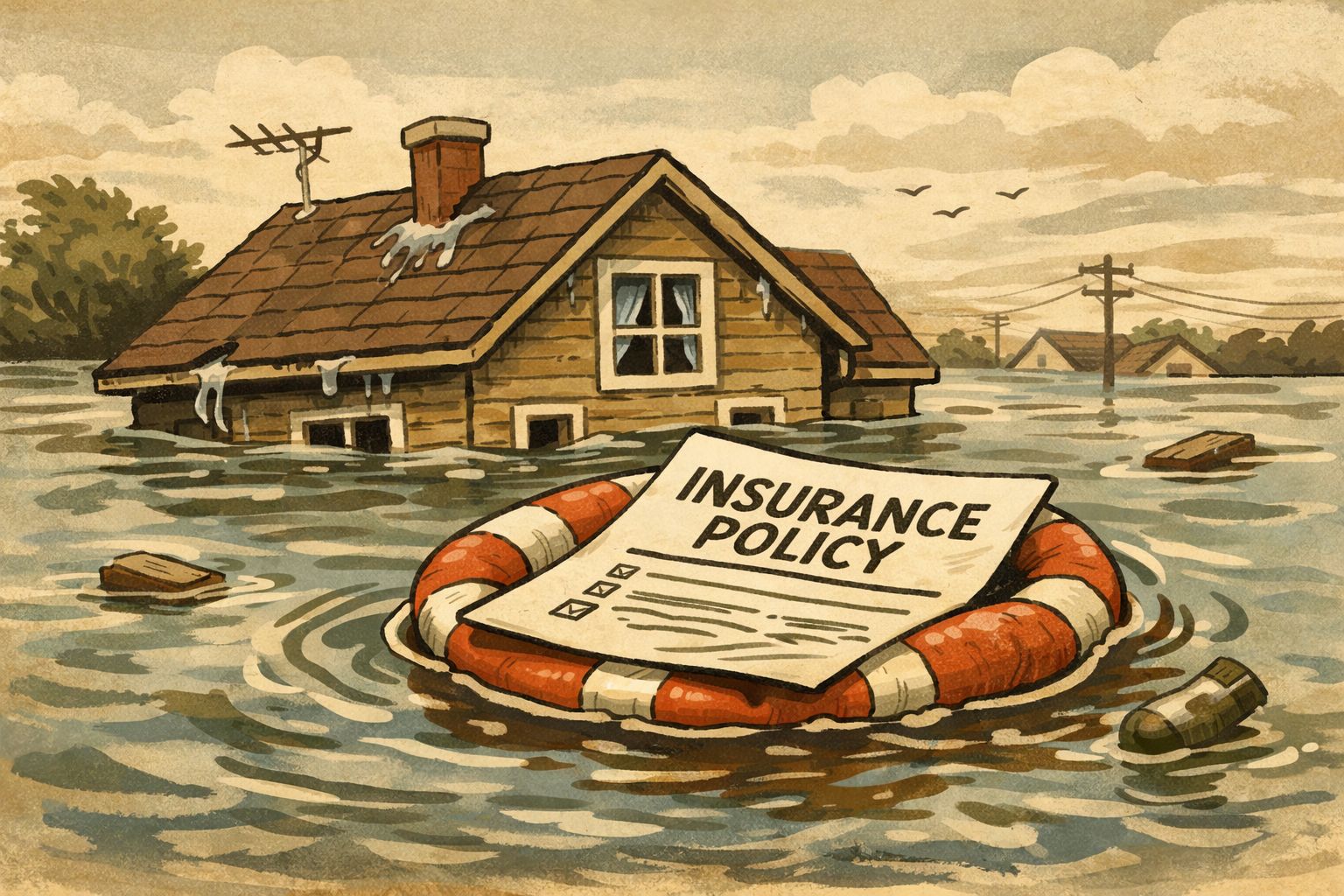
What will courts make of an insurance policy that both "guarantees" the cost of rebuilding a home and excludes costs caused by zoning and construction laws? That was the $350,000 question in this case — and the SCC sided with the insurer.
A bit of context: Flooding wiped out a home on the Ottawa River in 2019. The homeowners figured they were covered, having paid extra for a "Guaranteed Rebuilding Cost" endorsement. But their policy also had a carveout: it excluded cost increases caused by zoning or construction laws. And with the home sitting in a conservation area, new construction rules added roughly $350,000 to the rebuild.
The Court had to untangle these competing provisions to decide whether "guaranteed" rebuilding costs should trump the exclusion.
At the SCC: The Court split 7–2, with Justices Karakatsanis and Côté each writing separate dissents. Justice Rowe, writing for the majority, said the policy was unambiguous — the compliance cost exclusion carries the day.
The key reasoning? The endorsement was worded as an amendment to the payment formula, not an additional grant of coverage. It modified how much the insurer would pay, not what it would pay for. And the endorsement itself stated that "in all other respects, the policy provisions and limits of liability remain unchanged." That language, Justice Rowe held, meant the compliance cost exclusion still applied.
The nullification doctrine — alive but not applicable here
What about the principle that courts won't uphold insurance exclusions that completely defeat the purpose of coverage? The majority held the bar wasn't met. The rebuilding cost endorsement still serves its core purpose: letting homeowners recover rebuilding costs that exceed the declared amount of insurance. They're just getting less than they might have expected.
The dissenters saw it differently. Justice Karakatsanis agreed that the carveout for compliance costs applied to the rebuilding endorsement, but she found ambiguity in the “increased costs” language. In her view, a plausible interpretation was to look at whether costs have “increased” since the contract was signed — and she resolved that ambiguity in favour of the homeowners.
Justice Côté took more direct aim, finding that the exception for compliance costs didn’t even apply to the rebuilding cost endorsement:
The phrase "Guaranteed Rebuilding Cost Coverage" favours an understanding that the GRC endorsement does more than provide for "some" or "most" of the cost of rebuilding. Its ordinary meaning suggests that the GRC endorsement covers the field with respect to the cost of rebuilding.
Big picture: The most legally interesting piece here is probably the nullification argument. Courts in Ontario and BC had taken competing approaches to what happens when an exclusion completely eviscerates a grant of coverage. Now we have a clear answer: nullification is always a live issue — even when the contract language is unambiguous.
FROM OUR COMMUNITY
What’s new at Inn Laws

It’s been a busy start to 2026. So far this year, we’ve hosted events on delegating like a pro, business development, and building multi-step AI workflows. We also got together in Toronto this week for our first in-person event of the year.
One moment from the delegation session that's stuck with me: our guest speaker saved up six months of salary before making her first hire. The new hire helped double revenue, so she never ended up touching the buffer. Lawyers are great at making excuses not to delegate — and making things harder on ourselves in the process. The real barriers to delegation are often psychological, not financial.
Next up: in-person events in Vancouver (Feb 24) and Calgary (Feb 25). We're opening a few spots at each to non-members — if you want to join, reply to this email.
And if you've been thinking about joining a network of lawyers who are actually building the practices they want, membership applications are open.
BY THE NUMBERS 📊

$750,000: The penalty Estée Lauder Cosmetics must pay after pleading guilty to violating CEPA by importing eyeliners containing a "forever chemical" without notifying Health Canada.
6.85 million: The number of customer email addresses Home Depot shared with Meta without getting meaningful consent. The BC Court of Appeal has now upheld certification of the resulting privacy class action, rejecting Home Depot's argument that hashing the data made it anonymous.
25 to life: The sentence for former Kamloops lawyer Rogelio "Butch" Bagabuyo, who murdered one of his clients. The client hired Bagabuyo to hide $780,000 from his wife during a divorce. Instead of turning down the unethical mandate, Bagabuyo spent the money and killed the client. His downfall? Asking someone to help carry a tote bin containing the body. That, and forgetting to throw away his handwritten murder to-do list.
MAKING HEADLINES
⚖️ Premier Danielle Smith threatened to withhold funding for new judicial positions unless the federal government gives Alberta a formal role in appointing judges. The move follows her comment that she wished she could "direct the judges" — which prompted a rare joint statement from Alberta's three Chief Justices. Federal Justice Minister Sean Fraser rejected Smith’s latest demand, saying that the federal government won’t backstop shortfalls if Alberta pulls funding — and Albertans will feel the pain.
🌍 Youth climate activists are asking the Ontario Court of Appeal to reopen a constitutional challenge aimed at Ontario’s emissions legislation. Ford’s government repealed the legislation weeks before a scheduled hearing last year, but the activists now say the Court should make a ruling anyway.
🎓 Quebec released a revised tuition policy maintaining a 33% increase for out-of-province students after a court struck down the original hike for lacking evidence it would protect French. The new justification? Fiscal responsibility — not language protection.
🔒 Alberta launched a public consultation to modernize PIPA, the province's private-sector privacy law. The survey — open until February 17 — asks about AI governance, children's data, and giving the Privacy Commissioner direct fining power.
🏛️ The SCC granted leave to appeal in a case involving a class action against Air Canada. Quebec courts ordered Air Canada to pay more than $10M in damages for charging passengers more than the advertised ticket price.
🧸 Toys "R" Us Canada is back in creditor protection — its second CCAA filing in under a decade. Fairfax Financial rescued the Canadian arm of the business through a $300 million acquisition in 2018. This time the numbers are worse: $160 million in unsecured debt, $120.9 million owed to vendors, $36 million in unredeemed gift cards, and just 22 of the chain's original ~100 stores still operating.
THINGS NOT TO DO 😤
Don't conspire with your client to fake a mistrial.
In a decision described by the presiding judge as revealing "deeply troubling" conduct, a mistrial was declared in a sexual assault trial after allegations that defence counsel actively conspired with her client to manufacture a breakdown in the solicitor-client relationship because she was unprepared.
The [client’s claim] of being counseled to bring a false judicial complaint against the trial judge, and possibly obstruct justice, is deeply troubling, but it is highly credible considering that [the client] provided copies of the contemporaneous handwritten notes between himself and Ms. Wolfe.

Reply